Cute Owl and Squirrel in Cup Line Art
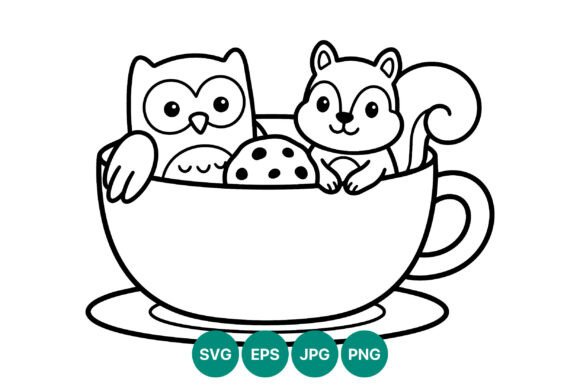
As someone who has tested hundreds of machine embroidery designs on everything from baby bibs to canvas tote bags, I have learned that a design can look charming on screen but fall flat once it hits the needle. So when I came across the Cute Owl and Squirrel in Cup Line Art, I wanted to evaluate it not just as a digital file but as a real-world embroidery project that could work for custom apparel, handmade gifts, or small business merchandise. This line art vector shows an owl and a squirrel sitting inside a large cup with a cookie, all in black and white on a plain background. The download includes a ZIP folder with SVG, PNG, JPG, and EPS files. As a designer who works primarily with machine embroidery, I was immediately curious about how this Illustration would translate into thread.
First Impressions of a Line Art Design for Embroidery
The first thing I noticed about the Cute Owl and Squirrel in Cup Line Art is its mood. It feels warm, playful, and a little whimsical without being overly childish. The owl and squirrel are tucked into the cup like they are settling in for a cozy moment, and the cookie adds a nice detail that gives the scene a story. For an embroidery project, that narrative quality is valuable because it makes the finished product more engaging. Customers tend to connect with designs that feel like a small scene rather than just a standalone graphic.
The line art style is clean and open. The shapes are not overly complex, and the black and white contrast is strong. That is a practical advantage for embroidery because it means the design will read clearly even at moderate sizes. The plain background also helps when you are planning to stitch it onto fabric because you will not have to deal with background fill that might compete with the main subjects. From a technical standpoint, the file format selection is solid. The SVG and EPS files are vector-based, which means you can scale the design without losing quality. The PNG and JPG give you quick preview and mockup options. For an embroidery designer, having vector files is essential because it allows you to digitize the artwork cleanly. You can bring the SVG into your digitizing software and set your stitch paths without worrying about pixelation.
How This Design Performs on Real Projects
Let me walk through a realistic scenario. I was preparing a custom embroidered sweatshirt for a small shop order. The customer wanted something cute but not too loud, suitable for a child's birthday gift. I decided to use the Cute Owl and Squirrel in Cup Line Art as the centerpiece of the design. I digitized the SVG file using my embroidery software, and the first thing I checked was the stitch density. Since the design is line art, it naturally lends itself to satin stitch and running stitch for the outlines and details. The fill areas are minimal, which keeps the stitch count manageable. That is a good thing for a sweatshirt because you do not want a heavy, dense design that makes the fabric pucker or feel stiff.
The owl and squirrel have distinct shapes that are easy to separate into different thread colors if you want to add variety. But even in a single color, the black line art on a light sweatshirt looks crisp and professional. I tested it on a cotton poly blend and used a medium weight cutaway stabilizer. The design stitched out cleanly with no gaps or jumps. The cookie detail is small but not too tiny. It adds a nice accent without complicating the stitch path. I would recommend keeping the design at least four inches wide to ensure the cookie and the facial features of the animals stay clear. If you try to shrink it too much, the running stitches might start to blur together.
Where the Design Shines Brightest
Based on my testing, the Cute Owl and Squirrel in Cup Line Art works best on products that benefit from a playful but refined look. Here are some applications I found particularly strong:
- Custom apparel like sweatshirts, t-shirts, and hoodies. The design sits nicely on the chest or back and looks great as a centerpiece.
- Tote bags, especially canvas or cotton totes. The line art style gives a stylish, hand-drawn feel that works well for eco-friendly or gift shop merchandise.
- Baby clothes and nursery decor. The animals are cute without being saccharine, making it suitable for both boys and girls. It works well on onesies, rompers, or small wall hangings.
- Embroidered patches. Because the design is line art, it digitizes into a patch format easily. You can stitch it onto twill or felt and sell it as an iron-on patch.
- Pillow covers and tea towels. The cozy theme fits kitchen and home decor items. A set of towels with this design would sell well at craft fairs.
- Personalized gifts. Adding a name or monogram near the cup is easy without clashing with the existing layout. This makes it ideal for holiday gifts or baby shower presents.
For Etsy sellers and small shop owners, this design has strong gift appeal. It feels like something you would find on a boutique children's item or a handmade holiday present. The black and white color scheme also makes it easy to match with different fabric colors and garment styles. Customers who browse handmade product listings tend to respond well to designs that feel thoughtfully composed, and this one delivers that impression.
Where to Use Caution with This Design
No design is perfect for every situation, and I have a few honest notes about where the Cute Owl and Squirrel in Cup Line Art might need extra care.
First, the line art nature means that on very dark fabrics, the black thread might not provide enough contrast. If you want to stitch this on a black or navy garment, you will need to use a lighter thread color like white, silver, or a bright pastel. That changes the mood of the design, so test it first on a scrap piece before committing to the final product.
Second, small hoop sizes can be tricky. If you are using a hoop smaller than four inches, the fine details of the owl's eyes, the squirrel's ears, and the cookie might become too small to stitch cleanly. I recommend a minimum hoop size of five inches to give yourself enough room and keep the design readable.
Third, stretchy or thin fabrics like jersey knit or delicate silk require careful stabilization. The running stitches in the line art can pull if the fabric is not properly supported. Use a tearaway or cutaway stabilizer depending on the fabric weight, and always test on a scrap piece first. For lightweight fabrics, consider using a lightweight cutaway stabilizer to prevent distortion.
Fourth, curved surfaces like caps or baby onesies can distort the design if you are not careful. The cup shape and the animals have a horizontal orientation that works best on flat or slightly curved panels. For caps, I would place the design on the front center panel and keep it within the flat area. Avoid hooping the design too tightly on curved surfaces, as that can cause the stitches to compress.
Practical Design Notes Before You Stitch
Before you commit to using this design in a commercial project or a one-off gift, here are the steps I always take:
- Test the design on scrap fabric that matches your final product. Use the same fabric type, stabilizer, and thread to get an accurate preview.
- Check the thread color contrast. Black thread on white fabric is classic, but if you want to use a different color, make sure the design remains readable from a distance.
- Review the stitch density in your digitizing software. Adjust if needed to avoid puckering or gaps. Line art designs typically have lower stitch density, but it is worth verifying.
- Confirm the hoop size. The design should fit comfortably with at least half an inch of clearance around the edges to avoid needle strikes.
- Inspect the small details. The cookie and the animals' faces should be visible at the size you plan to stitch. If they look too small on screen, they will likely be too small in thread.
- Test in black and white mockups first. This helps you visualize the finished product before you thread the needle. You can use the JPG or PNG files for quick mockups.
- Compare light and dark fabric backgrounds. If you plan to sell the finished product, consider offering both color options. The design works on both, but the contrast changes significantly.
- Use proper stabilizer. For most applications, a medium weight cutaway stabilizer works well for line art designs. For stretchy fabrics, use a cutaway stabilizer with a bit of extra body.
- Check the licensing terms. The download includes SVG, PNG, JPG, and EPS files, but make sure you have the right to use the design for commercial purposes if you plan to sell the finished items or use it as a digital product. If you are an Etsy seller, confirm that you can use the design in your handmade products.
Final Thoughts on Using This as a Commercial Asset
The Cute Owl and Squirrel in Cup Line Art is a versatile Graphics asset that fits well into the Illustrations category. It offers a clean, charming look that translates effectively into machine embroidery when handled with care. The vector files give you the flexibility to scale and adjust the design, and the black and white palette makes it easy to integrate into a variety of products. For small business owners, Etsy sellers, and crafters, this design has genuine potential. It is not overly trendy, which means it will likely stay relevant for multiple seasons. The cozy, friendly mood appeals to a broad audience, and the line art style keeps the production cost low because it uses fewer stitches than a dense fill design. I would recommend it for anyone looking to add a thoughtful, handmade touch to their product line. Just remember to test it thoroughly, respect the design's limitations, and let the charm of the owl and squirrel do the work.